
Disclosure: This post may contain affiliate links. I may earn a small commission for my endorsement, recommendation, testimonial, and/or link to any products or services from this website.
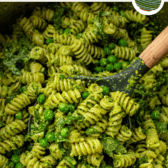
This Pea Pesto Pasta tosses homemade pea pesto with al dente pasta and arugula for an easy weeknight dinner filled with sneaky vegetables and plant protein. Vegan; Gluten-Free, Nut-Free, and Oil-Free Options.
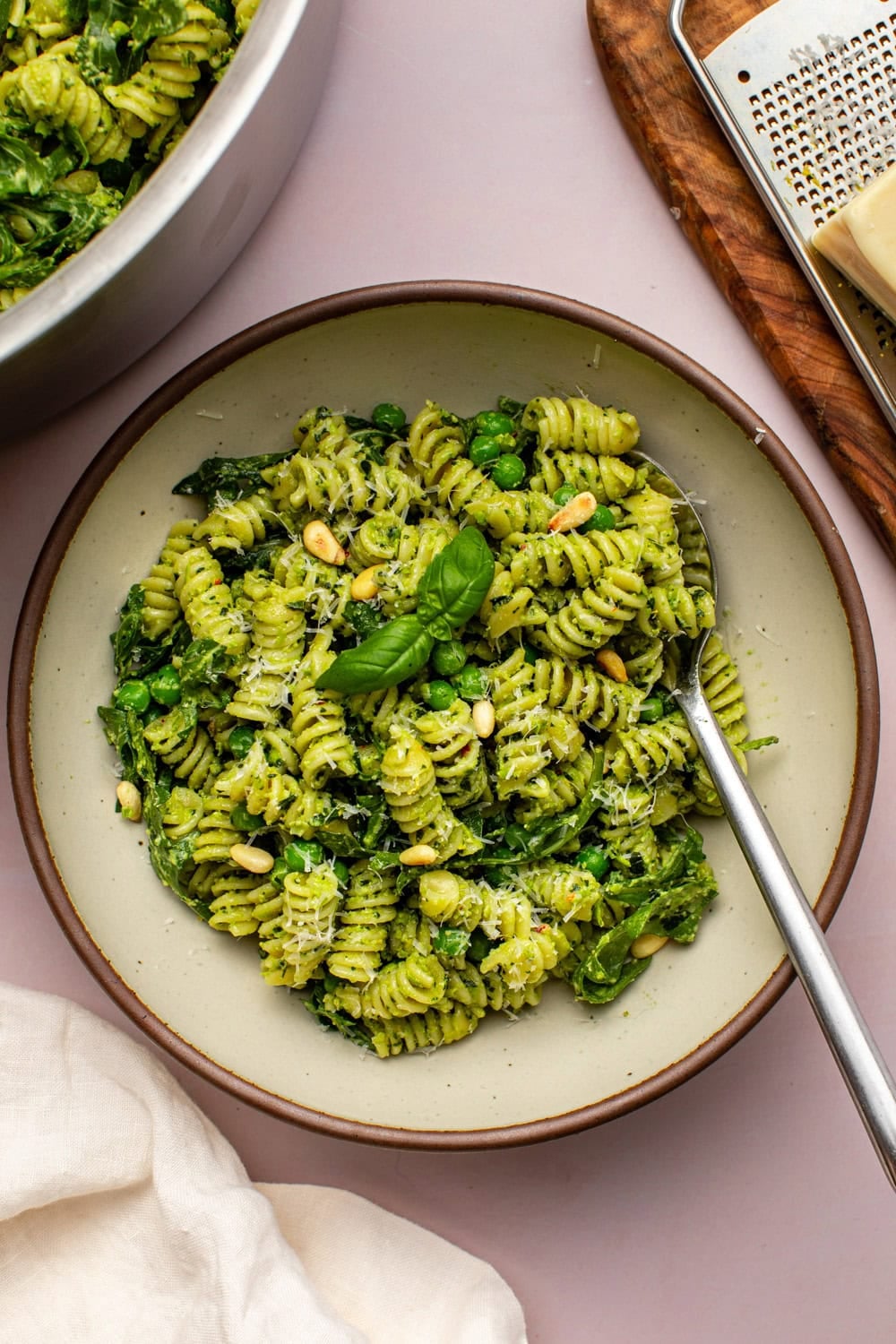
Just like my Pistachio Pesto Pasta, this Dairy-Free Pea Pesto Pasta puts a twist on the classic Italian herb sauce. By blending green peas directly into the pesto, you get a vibrant sauce that’s subtly sweet and secretly high in protein. Just toss the pesto with pasta, arugula, and peas, and you’ll have an exciting spring dinner in only 25 minutes!
⭐⭐⭐⭐⭐ reader review:
“That was soooooo goood!!!! the flavor was intense and it was so creamy!”
– Marianna
Table of Contents
Easy Pea-sy Pesto Pasta
Not-so-fun fact: I hated pesto for a solid 4 or 5 years after one bad experience led to an upset tummy. However, I’m happy to report that that phase of my life has passed, and I’m back on the pesto-obsessed train! I’ve been tossing it in this Zucchini Pesto Pasta and slathering it on these Grilled Pesto Tofu Sliders ever since.
This Pea Pesto Pasta is a slightly different variation of my near-classic Nut-Free Vegan Pesto, adding green peas to the sauce for some sneaky veggies, added fiber, and plant-based protein. It’s herby, zesty, and easy to make with fresh or frozen peas! I like tossing the pesto pasta with fresh arugula to help balance the sweetness of the peas, but you can leave it out or swap it for the veggies of your choice.
Ingredients for Vegan Pesto Pasta
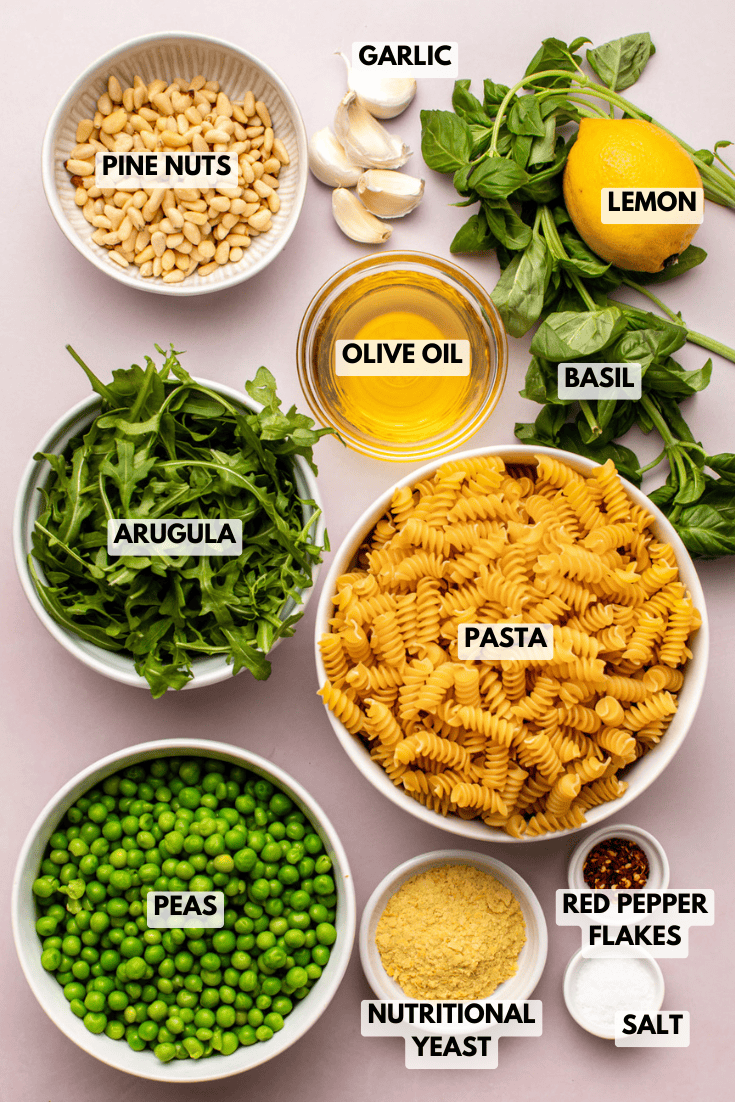
The star of this recipe is the vegan pea pesto. It’s easy to make in a food processor with frozen (but thawed) green peas and all of the classic vegan pesto sauce ingredients, like basil, garlic, pine nuts, nutritional yeast, lemon juice, olive oil, and simple seasonings.
Good news: You can use homemade pea pesto on more than just pasta! Spread it on a sandwich, stir it into a cold pasta salad, or fold it into creamy risotto. I’m a big fan of baking it into my 3-Ingredient Pesto Star Bread. It’s so yum!
How to Make Pea Pesto Pasta with Frozen Peas
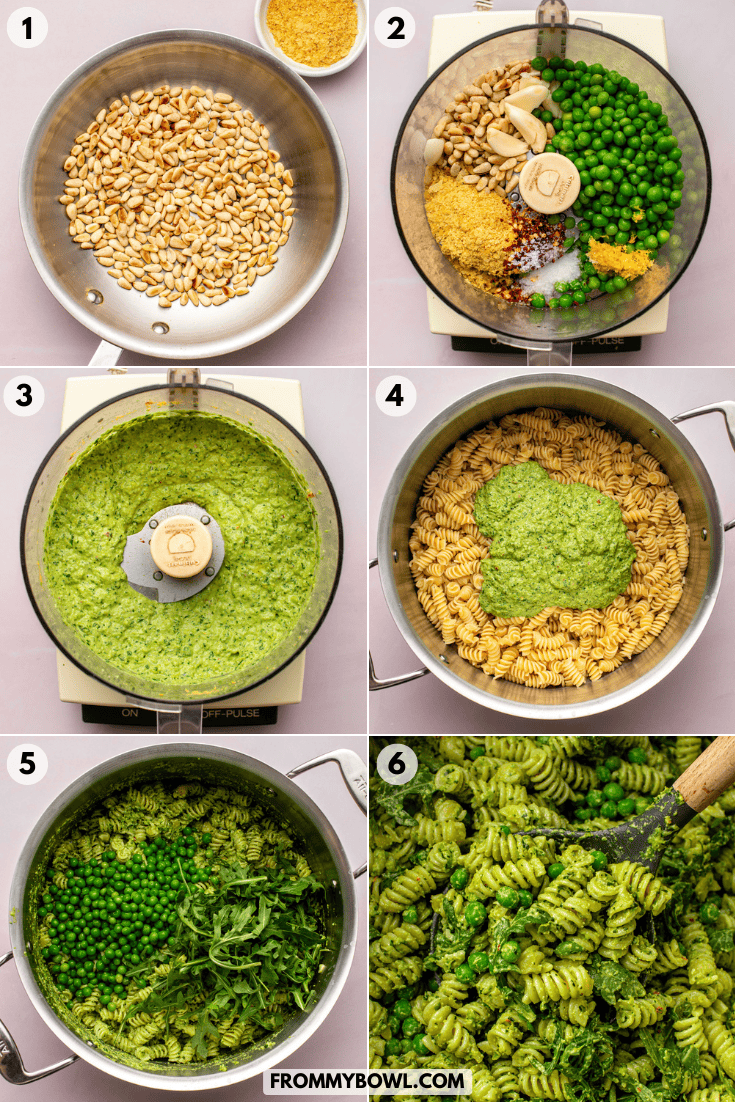
- Cook the pasta in a pot of boiling water until al dente. Drain and set aside.
- Toast the pine nuts in a dry pan, then transfer them to a bowl. Toast the nutritional yeast in the empty pan, then transfer it to a separate bowl.
- Process the pine nuts, garlic, peas, lemon zest, lemon juice, red pepper flakes, and salt in a food processor until the mixture is slightly chunky. Pulse in the basil, then, with the motor running, stream in the olive oil until the pesto is smooth.
- Return the pasta to the pot along with the remaining peas and arugula. Pour in the pesto and toss to coat.
- Divide the pesto pasta between bowls and garnish with chopped basil, vegan parmesan, and the reserved pine nuts. Serve and enjoy!
Caitlin’s Cooking Tips
- Thaw the frozen peas before making the pesto. Just add them to a colander and rinse them with warm water until thawed, then dry them really well. Trust me, pesto made with rock-solid frozen peas is no good!
- Toasting the pine nuts and nutritional yeast: I don’t recommend skipping this step because (1) it only takes 5 minutes, (2) it’s really easy (all you need is a dry skillet), and (3) it improves the depth of flavor, taking the pesto from good to great.
Serving Suggestions
I love making pea and pesto pasta for a vibrant spring dinner. I almost always have leftover arugula after making a batch, so I’ll usually toss it in a lemony vinaigrette and serve it as a side salad. Paired with a few crusty slices of this Italian Herbs & Cheese No-Knead Bread, it quickly becomes a well-rounded meal for my whole family.
If you’re looking for more vegan pesto pasta recipes, you’ll also love this Pesto Orzo Salad, this Roasted Spring Vegetable Pesto Pasta, and this No-Boil Pesto Pasta Bake!
Or, if you love green peas as much as I do, then you’ll also love this Pasta with Peas and Herb Gremolata, this Green Pea Soup, and this Spring Orzo Salad with Peas and Lemon Vinaigrette.
How to Store Pesto Pasta
Pesto pasta is best served hot off the stove, when it’s still saucy and creamy. If you end up with leftovers, transfer them to an airtight container and store them in the fridge for up to 5 days. The pasta will dry out slightly as it absorbs the pesto, but it will still taste great.
Making this recipe for meal prep? It’s a good rule of thumb to mix some of the pesto sauce with the pasta to keep the noodles from completely drying out. Store some extra pesto in an airtight container on the side, then toss it with the reheated pasta before serving for some extra creaminess.
The pea pesto can also be made ahead of time and stored in a sealed container in the fridge for 3 to 4 days or in the freezer for about 1 month. I recommend topping the leftover pesto with a drizzle of olive oil or pressing a piece of plastic wrap on top to prevent it from browning as quickly.
Substitutions and Variations
- Gluten-Free Option: Swap the regular pasta for gluten-free pasta instead. I personally like using gluten-free shells made from chickpeas.
- Arugula Substitute: The arugula is optional and easy to replace with blanched spinach, steamed broccoli, or sauteed asparagus.
- Nut-Free Option: The pine nuts can be replaced with an equal amount of pumpkin seeds. I still recommend toasting them for the best flavor!
- Oil-Free Option: Reserve 1/2 cup of pasta cooking water, then stream 1/4 cup of the water into the pesto (step 4). Use more as needed to reach your desired pesto consistency.
Recipe FAQs
Peas are GREAT in pesto! They add a subtle sweetness and give the pesto some extra nutrition and a thicker, creamier texture.
I don’t recommend freezing the pesto-dressed pasta, but you can freeze the pea pesto in airtight containers or ice cube trays.
It varies, but one batch of pea pesto contains approximately 30 grams of protein.
Enjoy! If you make this recipe and decide to share it on Facebook or Instagram, don’t forget to tag me @FromMyBowl + #FromMyBowl! I would also love it if you could leave a comment below with a recipe rating! Thank you for the support 😊
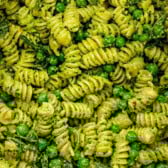
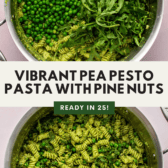
Vibrant Pea Pesto Pasta with Pine Nuts and Arugula
Ingredients
For the Pesto:
- 12 ounces frozen peas thawed and divided (see notes for fresh)
- 1/2 cup pine nuts
- 2 tablespoons nutritional yeast or sub 1/4 cup dairy-free parmesan
- 2 cups packed fresh basil leaves plus more for serving (about .75 ounces)
- 3-5 cloves garlic
- Zest of 1 lemon optional, for a stronger lemon flavor
- 2 tablespoons fresh lemon juice about 1 small lemon
- 1/2 teaspoon red pepper flakes optional
- 1 teaspoon kosher salt plus more to taste
- 1/4 cup olive oil
For the Pasta:
- 16 ounces pasta gluten-free if necessary
- 2 cups fresh arugula optional
- Dairy-free parmesan for topping (optional)
Instructions
- Prep: If your peas are still frozen, add them to a colander and rinse with warm water until they have thawed; set aside to let drain and dry some.
- Cook the Pasta: Bring a large pot of water to a boil and salt generously. Add your pasta and cook until al dente. Drain and set aside.
- Toast the Pine Nuts: In the meantime, warm a sauté pan over medium heat. Add the pine nuts to the pan and toast for 2 to 3 minutes, stirring frequently, until the nuts are fragrant and golden brown. Immediately transfer the nuts to a bowl or plate so they do not burn. Add the nutritional yeast to the same pan and toast for 45-60 seconds, until golden brown. Set aside.
- Make the Pesto: Set aside 2 tablespoons of the pine nuts for garnish in step 6, then place the rest of them in a food processor with a S-blade attachment. Add the garlic, 1 cup of the peas, lemon zest (if using), lemon juice, pepper flakes, and salt. Process for 45 to 60 seconds, scraping the sides of the processor with a spatula as necessary, until combined and only slightly chunky. Add the basil and process until combined, then stream the olive oil into the pesto while it is still running.
- Combine: Return the pasta to the pot and toss with the pesto until evenly coated. Add the remaining peas and arugula and toss again. Warm briefly on the stove if desired, stirring occasionally.
- Serve & Store: Divide between serving bowls and top with fresh chopped basil and the reserved pine nuts, or as desired. Store any leftovers in an airtight container in the refrigerator for up to 5 days.
Recipe Video
Recipe Notes
- Fresh Peas: You can also make this recipe with 3 cups of fresh peas. Blanch them in a large pot of boiling water for 1 1/2 to 2 minutes, or until bright green and tender, then drain, rinse with cold water, and use as directed in step 4.
- Nut-Free: Replace the pine nuts with equal pumpkin seeds; I still recommend toasting them for the best flavor!
- Oil-Free: Reserve 1/2 cup of pasta water from step 2. Replace the oil in step 4 with 1/4 cup of the reserved pasta water, plus more as needed to reach your desired pesto consistency.
Nutrition



Yummers. First recipe from your blog
I even had seconds for dinner (and didn’t feel guilty at all lol) Subbed spinach for the arugula because I didn’t have arugula lol. Also tried the chickpea past. Can’t wait to try another recipe
So happy to hear you liked it!
that was soooooo goood!!!! the flavor was intense and it was so creamy!????
Thanks for letting us know how much you liked it!
Have you tried freezing this, did it work out? Looks delicious!
You can freeze and re-use the pesto, but I would not freeze and reheat pasta (just to clarify!)
I served this with the red lentil sedanini from Trader Joe’s and it made for a really filling, delicious meal that even the carnivores in my family enjoyed! I ended up boiling only two of the four cloves of garlic and mincing the remaining ones raw, as I like the bite of raw garlic, and adding another raw clove after everything was blended. I also included a bit more lemon juice to balance the sweetness of the peas and replaced about half of the basil with spinach simply because our tired little basil plant didn’t yield enough – it still worked out great. I can imagine putting this sauce to a variety of other uses, such as spreading it on sourdough toast or layering it with noodles, tofu ricotta, and roasted vegetables for a green lasagna.
I’m giving this four stars instead of five because it was amazingly delicious yesterday when I made it but today is so dried out 🙁 I was super excited to die this for my meal prep lunches adding the arugula separately each day so it would stay fresh. Do you have any suggestions for livening it up? Might have to just make another batch of the pesto to add separately each day as well to keep it creamy. Either way, it was delicious and I will definitely make it again, just probably not as a meal prep. Thanks for the awesome ideas though! This blog is awesome.
Hi Alicia,
You could continue to thin the sauce out with almond milk or water if you’d like! Unfortunately all pastas dry out over time – until some scientist comes up with a way to counteract that, I think that is just a fact of life 😉
What a beautiful pasta! Banza is also my favorite chickpea pasta brand! Did you add any nonstick spray or water to the pan before toasting your pine nuts, or did you use a nonstick skillet to do so? I would reckon that the pine nuts might leave residue if they accidentally burn!
I used a nonstick pan!
I made the pesto sauce last night as semi-meal prep for the week (i.e. just cook fresh pasta on the night I want to eat it). I used baby spinach leaves, homemade vegan parmesan and a handful of cashew nuts because I was too lazy to go to the shop for pine nuts and fresh basil. What a winner though! The sauce is not even going to make it for pasta because I tried it on sourdough toast and ate almost half immediately 🙂 I think this would also be good on a baked potato or maybe stirred through some rice as a side dish? My colleagues also had a taste and raved about it. Thanks Caitlin for the inspiration!
Ooooh yes – now I want to try it on toast!
What’s the purpose of toasting the nutritional yeast and nuts? Could I get away without doing that?
It improves the depth of flavor of the dish – I would not recommend skipping it as it only takes ~5 min and is really easy to do!
How much cooked peas does this make? I want to make it but I only have canned peas and don’t know how much to use!
It should make a little under 2 cups!
Hi! Really excited to try this recipe but I don’t access to fresh basil. Would substituting a bit of dry with some other leafy green work? Thanks!
You could use 2-3 tsp of Dried Basil, but I would add in 2 cups of fresh spinach leaves for volume 🙂
I made this with walnuts and pistachios. It was super tasty!! Thank you for sharing.
What a great idea!