
Disclosure: This post may contain affiliate links. I may earn a small commission for my endorsement, recommendation, testimonial, and/or link to any products or services from this website.
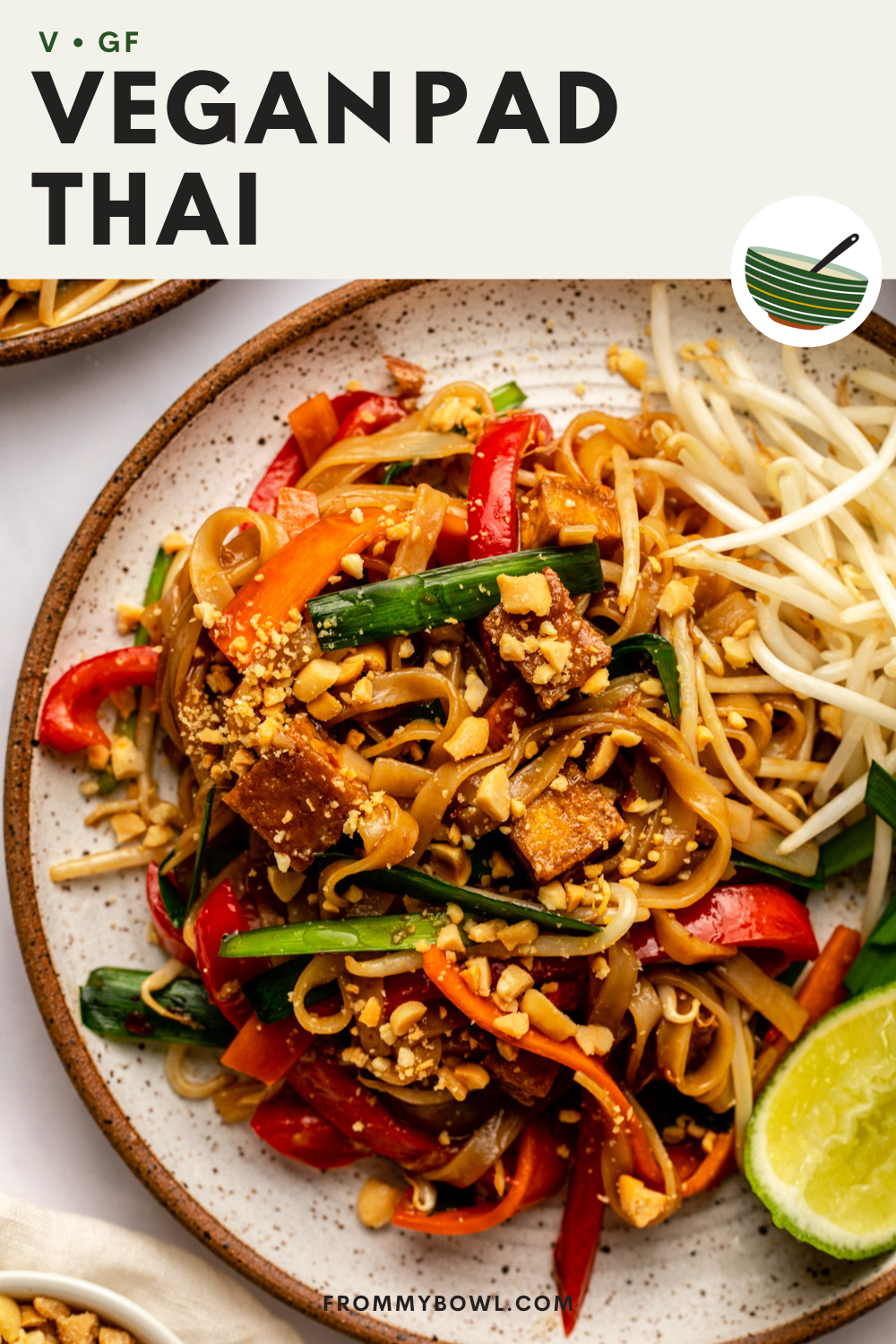
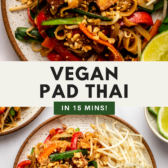
Craving authentic Thai flavor in 30 minutes? This Vegan Pad Thai Recipe combines rice noodles, crispy tofu, garlic chives, and bean sprouts with a sweet and sour tamarind sauce. It’s high-protein, restaurant-quality, and an effortless dinner for any night of the week! Vegan; Gluten-Free and Nut-Free Options.
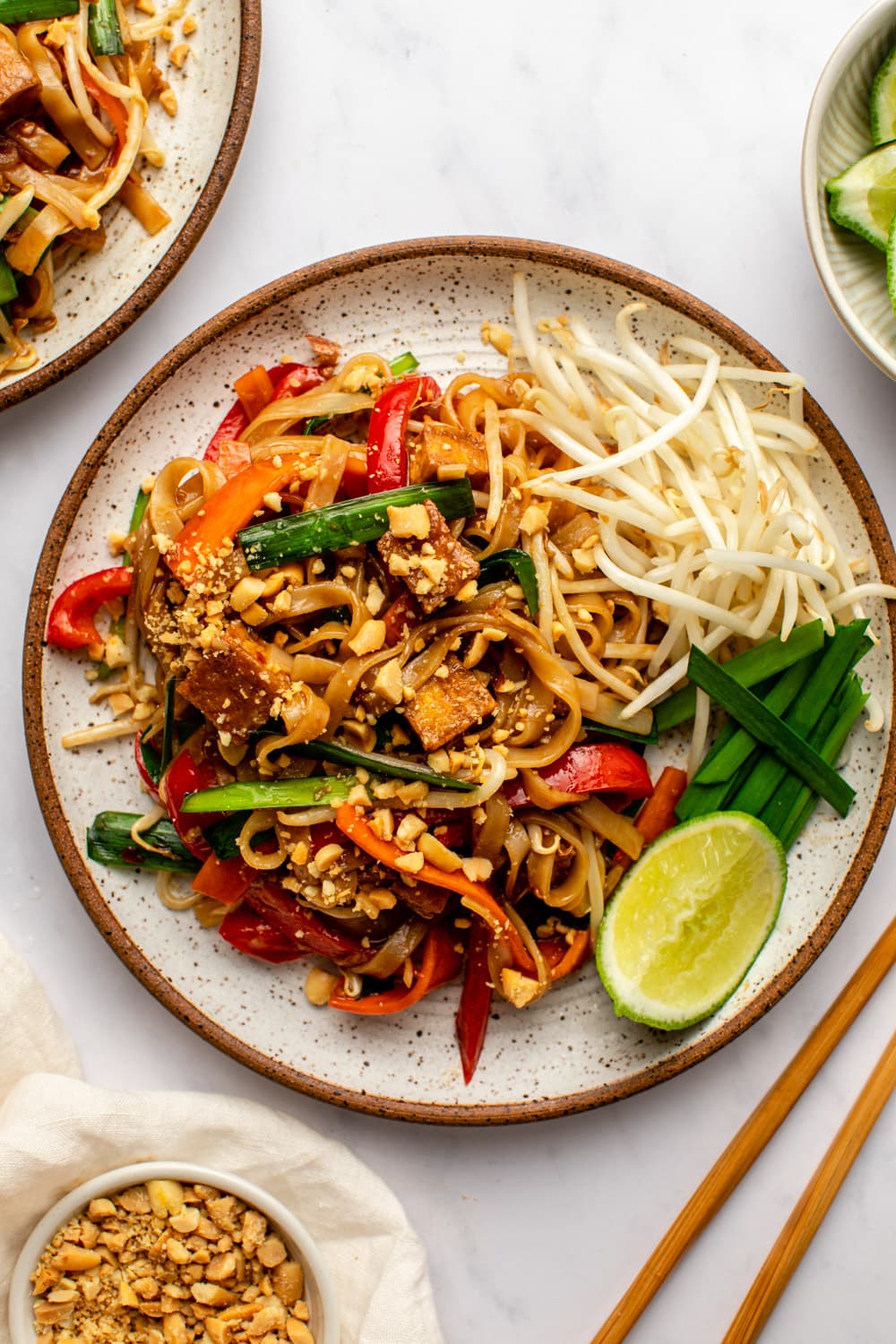
This Easy Vegan Pad Thai is as close to authentic plant-based Thai food as it gets. Tossing chewy rice noodles, crispy tofu, and fresh veggies in a rich tamarind sauce, every bite has the perfect balance of sweet, salty, and sour flavors. One wok, 30 minutes, and major street food vibes!
⭐⭐⭐⭐⭐
“I keep coming back to this recipe to make it. So good!” – Kimberley
Table of Contents
Why You’ll Love This Recipe:
Authentic Pad Thai is one of Thailand’s most iconic street foods, and for good reason. It’s fast, fresh, and very flavorful. And aside from a few non-vegan proteins, like seafood and scrambled eggs, almost everything else in this dish is naturally plant-based! That means it only takes a few tweaks to pull off this delicious Vegan Tofu Pad Thai without losing what makes the traditional dish so special.
- Close to Authentic: I did a lot of research to make this recipe as authentic to traditional Pad Thai as possible. Usually, it’s prepared with eggs, seafood, and very few vegetables, but I omitted the eggs and used vegan fish sauce to replicate the classic umami depth. The extra veggies—bean sprouts, garlic chives, bell peppers, and carrots—also came in clutch, bulking up the dish while adding a whole lot of color and flavor.
- A One-Wok Recipe: Traditional Pad Thai sauce is often simmered in a separate pan, but my version builds the sauce right in the wok. That means bigger flavor with fewer dishes to wash.
- Quick & Flexible: Dinner is ready in 30 minutes or less! Plus, I’ve given you endless substitution and variation ideas to suit your taste buds and what’s in your pantry. You’ll be hooked after the first sweet and savory bite!
If you’re looking for more easy weeknight noodles, save these 30-Minute Thai Curry Noodles and these Spicy Cumin Noodles for next time.
Ingredients for Almost-Authentic Vegan Pad Thai
This close-to-authentic Pad Thai recipe calls for a mix of non-traditional vegan pantry staples, fresh produce, and a couple of specialty items. The good news is that you can find most, if not all, of these ingredients at your local Asian grocery store. I highly recommend making the trip and putting in the effort to find everything you need, but I’ve also listed substitution ideas below and in the recipe notes!
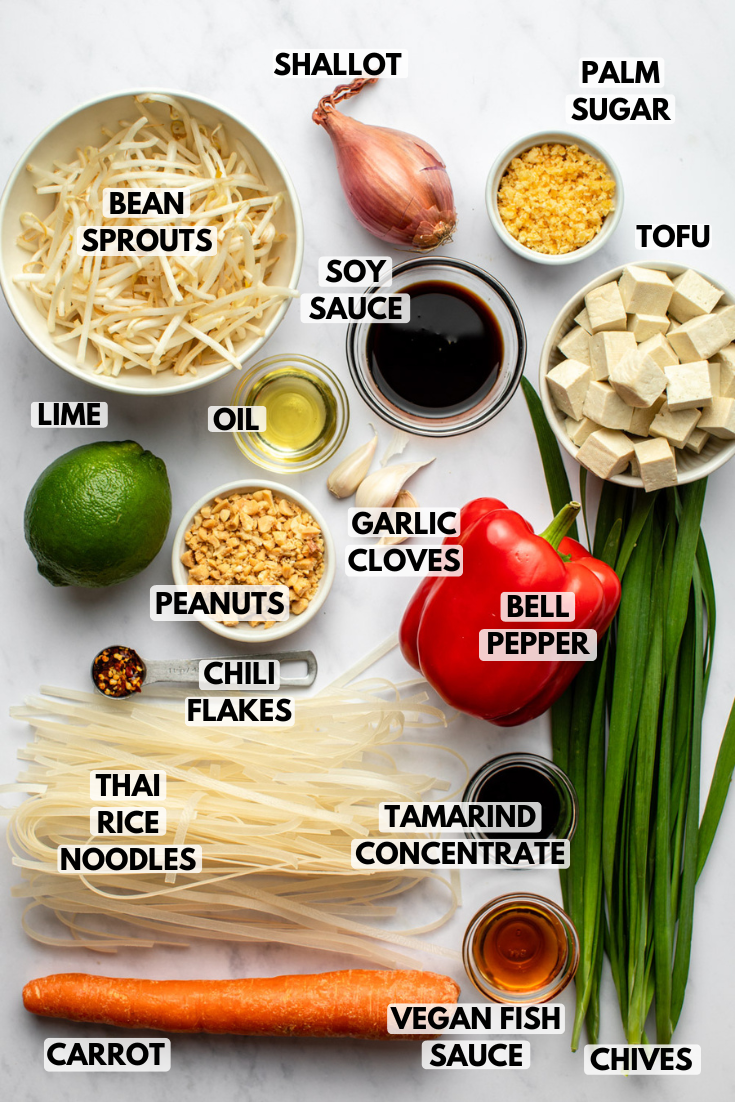
- Dry Pad Thai Noodles: if these aren’t labeled specifically as “Pad Thai Rice Noodles,” look for dry medium-width flat rice (or brown rice) stir fry noodles.
- Super Firm Tofu: it’s the most convenient option since it doesn’t need to be pressed ahead of time. If super firm tofu isn’t available, use extra firm tofu instead and press it 30 minutes beforehand. I do this in my tofu press, but you can also wrap the block in a kitchen towel and place something heavy on top to help the water drain.
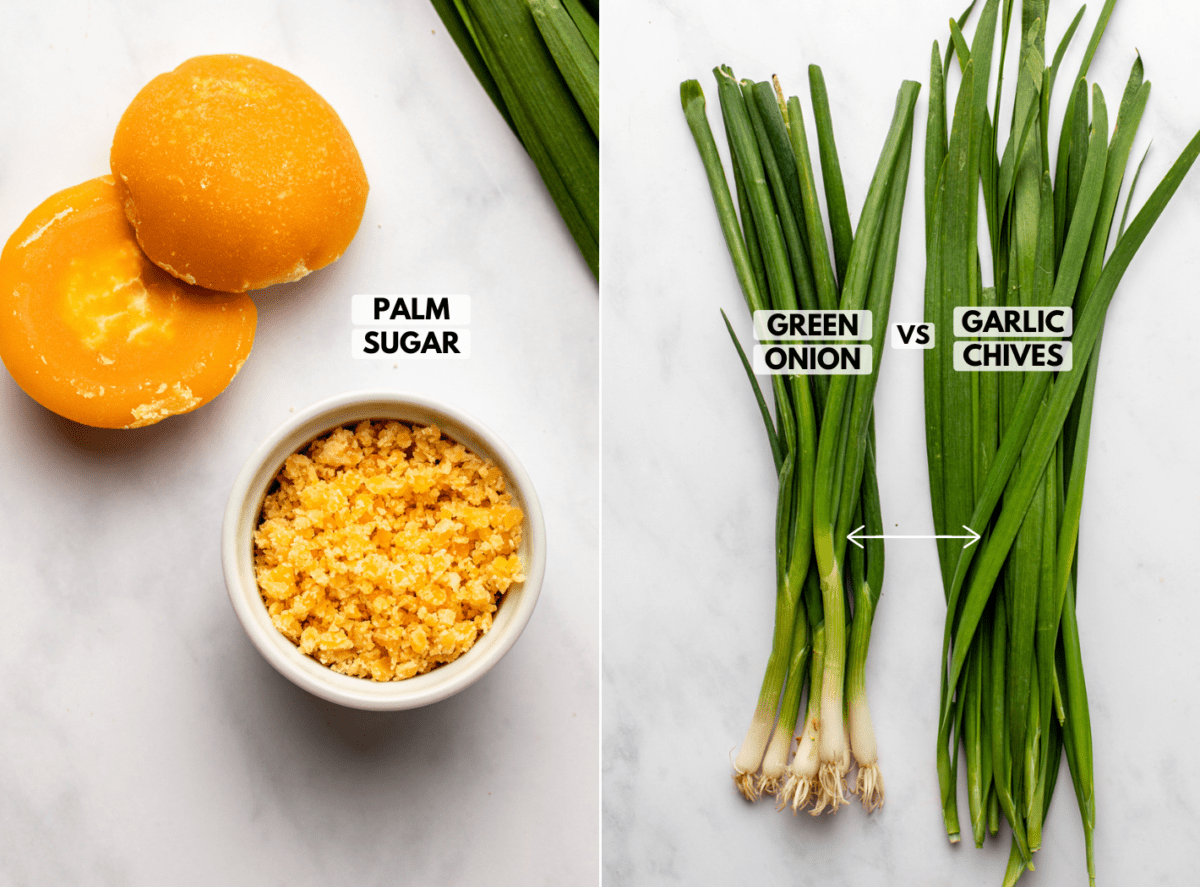
- Garlic Chives: these long, flat, and tender green stalks have a unique garlic-onion hybrid flavor that’s essential in traditional Pad Thai. Asian grocery stores almost always have them, but if they’re not available where you live, green onions (scallions) will work in a pinch!
- Palm Sugar: this natural sweetener is slightly less sweet than white sugar and is often sold in pouches and small discs at Asian grocery stores. Feel free to use an equal amount of coconut sugar as a substitute. Brown sugar works too, but it’s slightly sweeter, so I would start with 1 or 2 tablespoons, then add more to taste.
- Vegan Fish Sauce: Pad Thai is traditionally made with seafood, but vegan fish sauce does a great job of mimicking the same deep, savory funk. Ocean’s Halo is a good brand and is available in grocery stores, specialty stores, and online.
- Tamarind Concentrate or Paste: the Pad Thai sauce wouldn’t be nearly as fruity or tangy without the tamarind. A little bit of the liquid concentrate goes a long way, and it lasts forever in the fridge.
How to Make Vegan Pad Thai
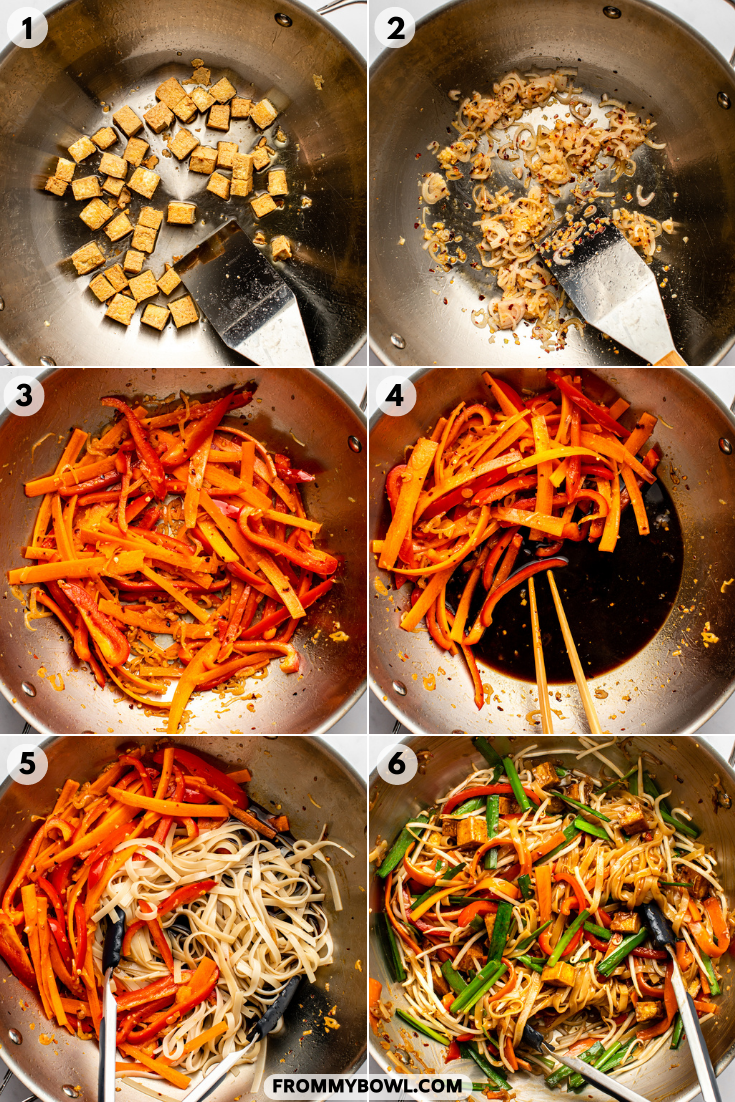
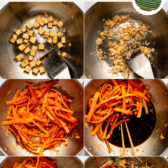
- Soak the rice noodles in boiling water until tender. Drain and set aside.
- Pan-fry the tofu in a wok until crispy. Set aside.
- Add the shallot, garlic, and chili flakes to the empty wok and sauté until the garlic browns. Next, sauté the carrot and bell pepper in the wok until tender.
- Add the sugar, soy sauce, tamarind, water, and vegan fish sauce to one half of the pan. Mix to combine, then simmer until the sauce has thickened.
- Toss the cooked rice noodles and tofu in with the vegetables.
- Turn off the heat, add the garlic chives and bean sprouts, and mix to combine.
- Plate the Pad Thai, top with peanuts, and serve with lime wedges and extra bean sprouts on the side. Enjoy!
Caitlin’s Cooking Tips
- Use a wok or large sauté pan: A wok’s deep curved walls distribute heat in a way that (1) prevents the sauce from reducing too quickly and (2) prevents it from becoming thick and gloopy. Instead, you get a perfectly glossy, saucy dish. If you don’t have a wok, use a large non-stick skillet instead.
- Warm up the oil properly: Before you start cooking, preheat the oil in the wok until it’s shimmering and lightly smoking. This gets the tofu crispy right away and properly browns the aromatics, allowing them to release their flavor into the oil and create a well-rounded dish.
- Overcooked noodles = mushy Pad Thai. Remember that the rice noodles will continue to cook after they’re added to the wok with the sauce and veggies. I find that soaking them in boiling water for 10 minutes keeps them tender even after the Pad Thai is ready. If you’re still worried about them becoming soggy, you can soak them for 1 to 2 minutes less.
Serving Suggestions
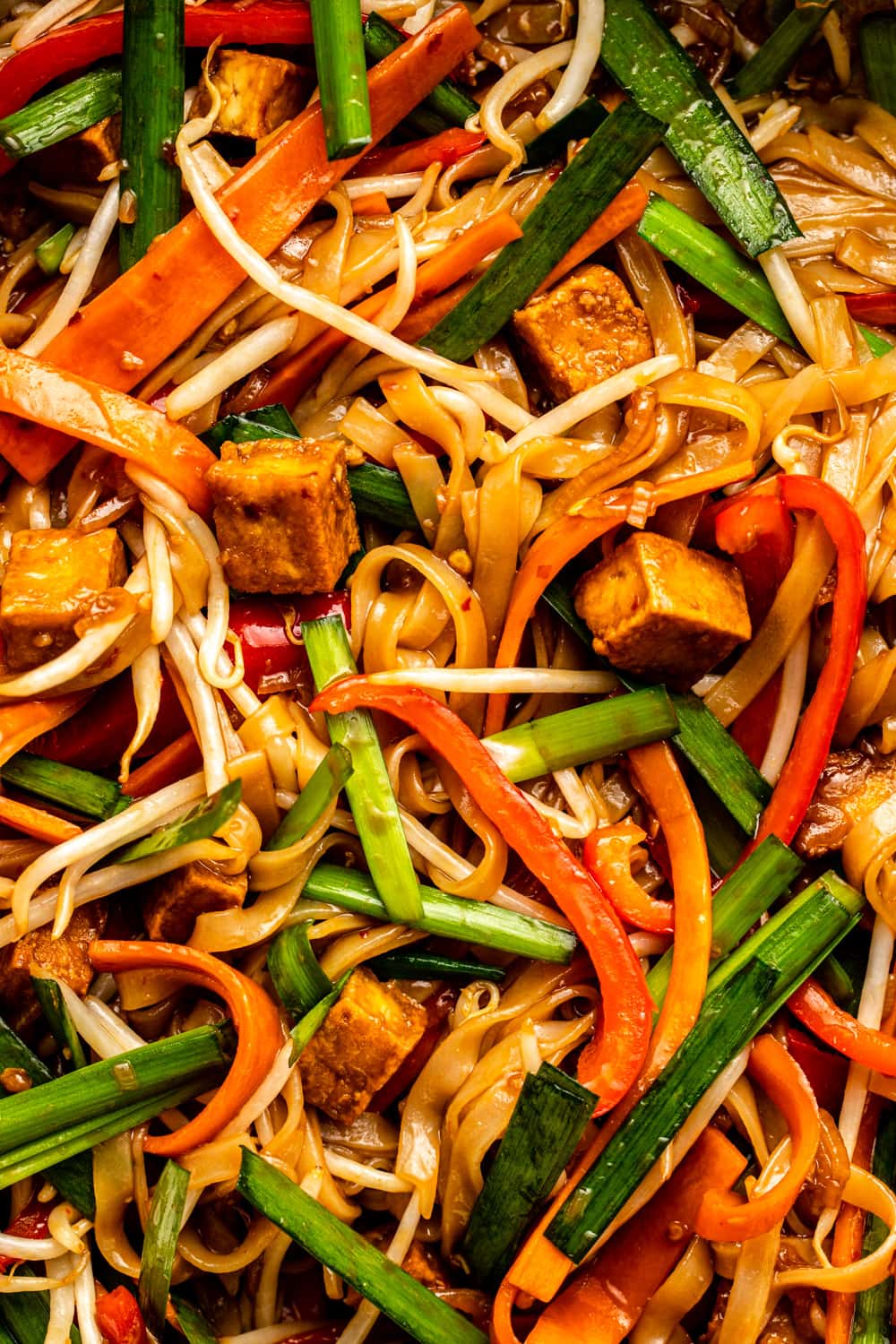
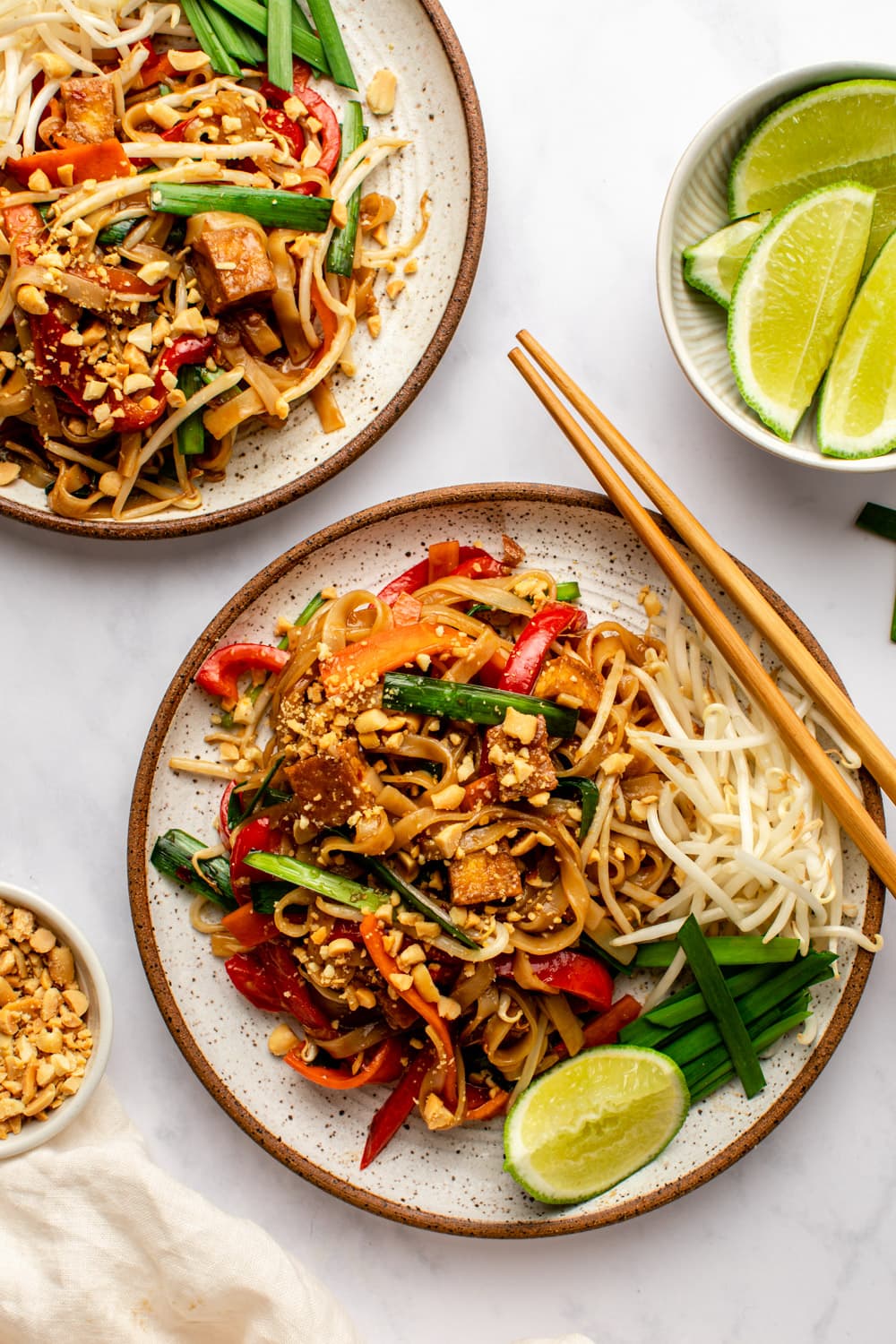
A big bowl of tofu Pad Thai sounds great for dinner, doesn’t it? Since my recipe pays homage to the traditional Thai version, fresh and flavorful toppings are a must—think bean sprouts, crushed peanuts, freshly squeezed lime juice, extra sliced garlic chives (or green onions), a drizzle of chili crisp, or chopped fresh cilantro. Personally, I love the salty crunch from the peanuts and how the crisp bean sprouts lighten things up and cut right through the richer flavors.
I rarely bother pairing Pad Thai with side dishes since one serving is quite filling on its own; however, if you’re in the mood for an epic meal, I’d suggest pairing it with this Thai-Inspired Salad with Tempeh or this Smashed Cucumber Salad with Edamame.
If you’re looking for more vegan Thai-inspired recipes, you’ll also love this Thai Green Curry, this Vegan Tofu Pineapple Curry, and this Thai Red Curry Noodle Soup!
How to Store Leftover Pad Thai
Vegan Pad Thai is best enjoyed while fresh, as the rice noodles will start to turn mushy the longer they sit. Any leftovers can be stored in an airtight container in the fridge for up to 3 days. Freezing is not recommended.
To reheat Pad Thai without it drying out, add the leftovers to a skillet with a splash of water or a microwave-safe bowl. Heat gently, tossing occasionally with tongs, until the noodles are saucy and warmed through.
Substitutions and Variations
- Gluten-Free Option: Swap the soy sauce for tamari or coconut aminos, and double-check that your vegan fish sauce, tamarind, and rice noodles are certified gluten-free.
- Peanut- & Nut-Free Options: Toasted cashews or slivered almonds make great stand-ins for peanuts. Or, if all nuts are a no-go, use crispy fried shallots, toasted sesame seeds, or roasted chickpeas instead.
- Tamarind Substitute: If you can’t find tamarind concentrate or paste in-store or online, use 1 tablespoon of fresh lime juice mixed with 1 teaspoon of rice vinegar. This does a decent job mimicking the flavor.
- Tofu Options: For a more hands-off method, make this Crispy Baked Tofu instead of pan-frying. Or, if you prefer a softer texture, skip pan-frying altogether and fold raw tofu cubes in with the noodles during step 7.
- Protein & Veggie Variations: You can always try substituting the tofu with crispy seitan or cooked soy curls. As for the veggies, feel free to toss in extras, like broccoli florets, snap peas, baby bok choy, or sliced mushrooms during step 5.
- Optional Flavor Boosters: For more seafood-y depth, stir in 1 tablespoon of dried nori flakes (seaweed) right at the end. For an “eggy” flavor, sprinkle a tiny pinch of kala namak (black salt) over top right before serving. It’s very salty, so only use a tiny pinch!
Recipe FAQs
Both are stir-fried noodle dishes, but Lo Mein is a Chinese dish made with wheat-based egg noodles and a savory, soy-and-sesame-based sauce. Pad Thai is a traditional Thai dish made with flat rice noodles and a bright, sweet-and-sour sauce.
You can, but I’d suggest increasing the amount to 3 or 4 tablespoons since the flavor isn’t as concentrated.
The drained noodles might stick together if they sit for too long. You can prevent this by either tossing the noodles with a little oil or by draining them right before adding them to the wok and tossing them in the sauce.
Enjoy! If you make this recipe and decide to share it on Facebook or Instagram, don’t forget to tag me @FromMyBowl + #FromMyBowl! I would also love it if you could leave a comment below with a recipe rating! Thank you for the support 😊
Vegan Pad Thai
Ingredients
- 4 ounces dry pad Thai rice noodles
For the Pad Thai Sauce:
- 2 tbsp soy sauce
- 1 tbsp vegan fish sauce or sub more soy
- 1 tbsp tamarind concentrate or 3-4 tbsp paste
- 3 tablespoons water
For the Pad Thai:
- 2-3 tbsp high-heat oil avocado, vegetable, or peanut
- 8 oz super firm tofu* cut into ½” cubes
- 1 shallot cut into thin slices
- 3 cloves of garlic finely minced
- 1-2 teaspoons chili flakes optional
- 1 carrot peeled and cut into matchsticks; optional
- 1 bell pepper thinly sliced; optional
- 3 packed tablespoons palm sugar or brown sugar
- 2 ½ cups bean sprouts, loosely packed
- 7-10 stalks garlic chives OR 5 green onions cut into 2” pieces
- ¼ cup peanuts, crushed or roughly chopped
- 1 lime cut into wedges
Instructions
- Cook the Noodles: Soak the noodles in boiling water according to package instructions; my noodles only needed 10 minutes, but some may take longer so prep accordingly! Once tender, drain the noodles and set aside.
- Prep: Warm wok or large sauté pan over medium heat. Once warm, add 2 tablespoons of oil and swirl it around to coat the sides. Whisk the soy sauce, tamarind concentrate, water, and vegan fish sauce (optional), together in a small bowl; set aside.
- Pan-Fry the Tofu: Add the tofu to the pan and cook for 5 to 7 minutes, stirring only occasionally, until crispy. Remove the tofu from the pan and set aside. Notes: If you do not want pan-fry your tofu, skip to step 3. If you are doubling the recipe, fry the tofu in batches).
- Aromatics: Add additional oil to the pan if necessary so the bottom of the pan is coated. Add the shallot, garlic, and chili flakes (optional) and sauté for 2 to 3 minutes, until the garlic begins to brown.
- Add Veggies (optional): Add the carrot and bell pepper and sauté for an additional 3 to 5 minutes, until the veggies are tender. Skip this step if you are not adding extra veggies.
- Make the Sauce: Push the shallot mixture to one half of the pan. Add the sugar to the other half and pour the soy sauce mixture on top; mix well, until the sugar is dissolved. Simmer for 2-3 minutes, until thickened.
- Combine: Add the cooked and drained rice noodles and tofu to the wok and use tongs to toss with the sauce. Cook until all of the extra liquid has evaporated from the pan. Taste the noodles and if they are still too firm, add water in 2 tablespoon increments and cook for a few more minutes.
- Final Touches: Turn the heat off and add the garlic chives (or green onions) and bean sprouts. Use tongs to mix well and let sit until the bean sprouts have wilted slightly.
- Serve: Transfer the Pad Thai to serving plates, making sure to get a good mix of noodles, tofu, and veggies. Top with peanuts and serve warm with a lime wedges and extra bean sprouts, if desired. Pad Thai is best enjoyed immediately, but you can store leftovers in the fridge for up to 3 days and reheat on the stovetop or in the microwave with a splash of water.
Recipe Notes
- Tofu: I prefer to use super firm tofu in this recipe as it requires no pressing, but you could also use extra-firm tofu and press well beforehand.
- Sugar: Pad Thai is traditionally made with palm sugar, but this can be hard to find in grocery stores. The next best alternative would be to use coconut sugar, followed by brown sugar. Brown sugar is slightly more sweet, so you can reduce it to 1-2 tbsp if desired.
- Tamarind: Tamarind is an essential component to Pad Thai and adds a delightfully tangy flavor! I like to buy tamarind concentrate as a little goes a long way and it keeps for a long time in the fridge. If you cannot find tamarind near you, replace it with the juice of 1 lime and 1 teaspoon of rice vinegar.
- Make it eggy: Add ¼-½ tsp black salt at end.
- Too add seafood flavor: Add 1 tbsp nori flakes at end, or to taste.
Nutrition




Yum! Made with 2x more veggies because we love our veggies. Otherwise followed the recipe pretty much to the T. Everyone loved!
Amazing! Thank you for the review, Lindsey 🙂
Delicious! We will be making again! I made it with the vegetable. I like to bake the tofu while prepping other ingredients to save time. I used half the brown sugar and didn’t miss it. Thank you!
So happy you enjoyed, Amy!
Absolutely delicious! It requires some work, especially because I added extra vegetables which needed to be chopped, but it was worth it. Definitely making this again.
So glad you enjoyed it, Nino!
I made this tonight and it was a fail, but I make your recipes all the time and I knew it couldn’t be you. After some research, I looked at the tamarind paste I got and it is from India. I did not know that Indian paste is a different flavor profile and way strong than Thai or Vietnamese tamarind paste. I am excited to try it again once I find the right paste!
Thank you for the feedback, Deanna! You are right, they have very different flavor profiles.
i made this for valentine’s dinner and it was so delicious! i wouldn’t have ever bought tamarind concentrate if it weren’t for this recipe and now i’m glad i have some on hand so i can make this at a moment’s notice! thanks for another delicious recipe, caitlin!
You’re so welcome! Glad it was a hit 🙂
This recipe is amazing! My boyfriend said it was one of the best meals I have ever cooked for him. I ended up adding a little bit of fresh cilantro as garnish at the end, and felt it was a nice touch. Thank you Caitlin for never failing to produce wholesome, easy to follow, and delish vegan recipes!
You’re so welcome, Katherine!
Caitlin recently updated this recipe from a previous Pad Thai recipe that my family greatly enjoyed. It is actually my 14 month old babies favorite food (minus the sriracha)! I have not had the opportunity to cook this new update but if it is anything like her original it will be absolutely delicious.
I would highly recommend any of her recipes as many others that I have tried are delicious. I would also state that upon reaching out to her to get the original recipe she replied and provided it to me immediately. Anyone with this level of commitment and care towards people that enjoy her work shows a high level of integrity and care beyond just the recipes she provides. I’ve recently purchased her cookbook as well and cannot wait to try even more of her delicious recipes. Thank you so much Caitlin!
Thank you so much, Aaron! We appreciate your review and happy that you and your babies love the recipe.
Hi there, Is there any chance you could pls email me the original recipe as well? Just can’t remember it! Thank you 🙂
Hi Lisa,
Please check your email.
Thanks for the great recipe. I didnt bother with the scrambled tofu and just used chopped up tofu and also added extra veggies ( beoccoli and zucchini). The rice noodles were cooked to package directions but were a bit overcooked once mixed in and heated with the veggies and sauce so next time I will undercook the noodles a bit
Thank you, Wayward! I appreciate the review 🙂
I keep coming back to this recipe to make it. So good!
So glad you keep coming back!
Thanks for the recipe. It was very tasty. I did add more spices to the tofu (salt, pepper, chicken spice mix and agave syrup). And I was standing in the kitchen for 1 hour total, not 30 minutes. Perhaps making it a second time goes easier and if I make the sauce at the start I could do it in 40 minutes 😉
Thank you for giving it a try, Elise!
Very easy. Tastes great
Thank you, Contessa!